Unconventional AI Secures $475M Seed Round: A New Contender in AI Hardware
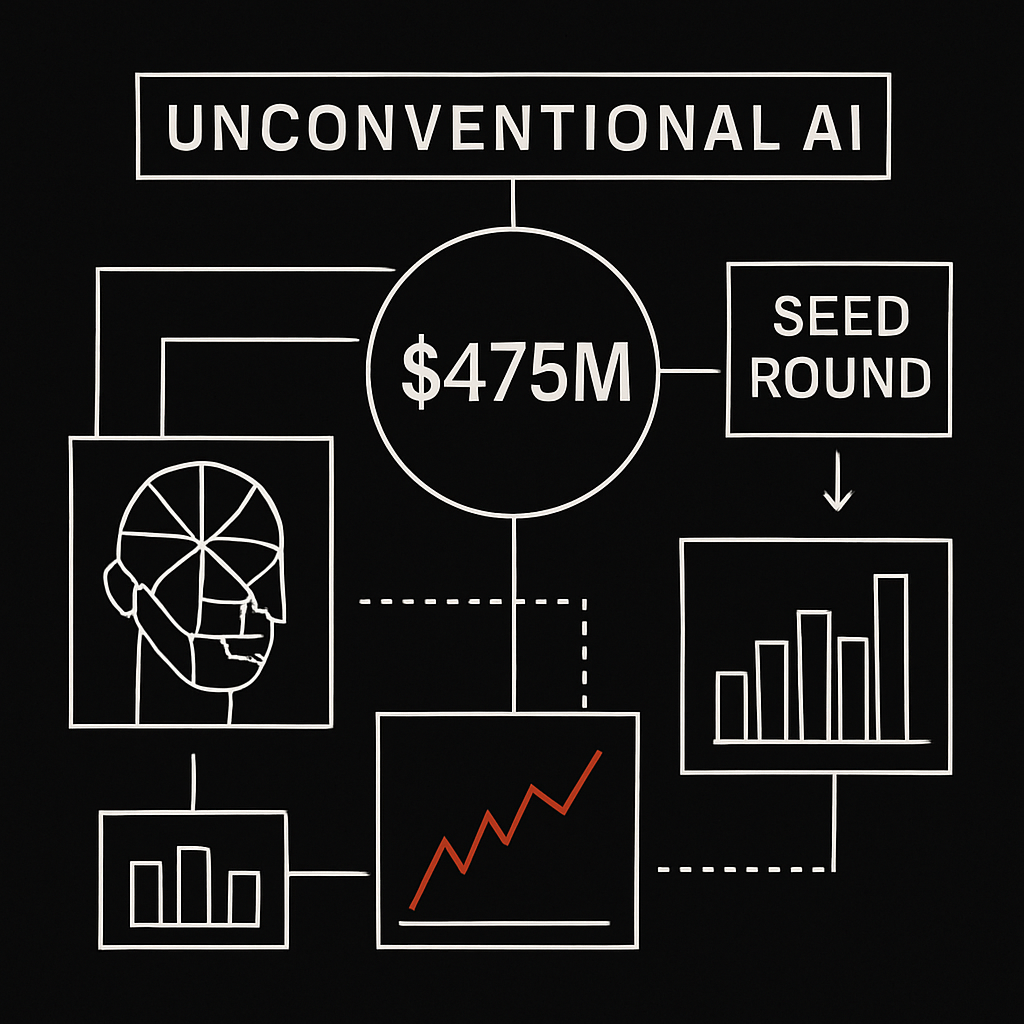
Unconventional AI has officially confirmed a $475 million seed funding round, placing its valuation at $4.5 billion. The startup, led by Naveen Rao, previously of Databricks, aims to revolutionize AI hardware by addressing limitations in current architectures. The infusion of capital marks a significant milestone, reflecting investor confidence in a sector poised for rapid growth as demand for more efficient AI solutions escalates. This funding round signals a shift towards specialized hardware tailored for AI applications, moving away from general-purpose solutions. Rao's leadership suggests a deep focus on optimizing computational efficiency, potentially harnessing innovative architectures or neuromorphic designs which can outperform traditional models in certain tasks.
Core technical details
Unconventional AI's approach centers on creating hardware that efficiently manages the intensive computational requirements of modern AI workloads. By building systems specifically designed for AI processing, the startup aims to enhance performance while mitigating latency and energy consumption. Rao’s previous experience at Databricks, a leader in big data analytics, positions him to address critical scalability issues, which are crucial for attracting enterprise customers reliant on AI for decision-making.
Why it matters for builders
For developers and engineers, the emergence of specialized AI hardware provides opportunities to refine applications that require high-speed processing and minimal downtime. Startups and enterprise-level companies may soon have access to infrastructure that dramatically reduces costs associated with training and deploying AI models. As the AI landscape evolves, builders must evaluate how these advancements can enhance existing systems and workflows, influencing software design and performance optimization.
What to watch / takeaways
Monitor how Unconventional AI advances its hardware prototypes and partnerships with software companies. The startup's progress will be crucial as it aims to compete against established giants like OpenAI and others, which dominate the current AI ecosystem. Additionally, observe market reactions and technological breakthroughs that may set new industry standards, particularly in how AI infrastructures evolve in performance and efficiency.